
WordPress 7.1: Gutenberg reduces the need for an army of plugins
With WordPress 7.1, it becomes clearer than ever that WordPress and Gutenberg are the way forward—and that we can begin letting go of the army of plugins previously needed to build a professional website.
WordPress developer and educator Elliott Richmond demonstrates this in his new video, WordPress 7.1 Reviewed — Fourteen Features Put to the Test. Rather than simply reading the release notes, he tests fourteen new features on the WordPress 7.1 release candidate. Thirteen receive a clear thumbs-up.
WordPress is gradually bringing the tools needed to build a professional website into the browser and into Core. WordPress 7.1 adds responsive styling, custom breakpoints and controls for hover, focus and active states directly to Gutenberg. These are precisely the kinds of features for which website builders previously installed extra block collections, CSS plugins or complete page builders.
Image editing is becoming part of the same integrated environment. The new media editor brings cropping, rotation and metadata editing together in the browser. This means fewer interruptions to the publishing workflow—and one less reason to add another plugin.
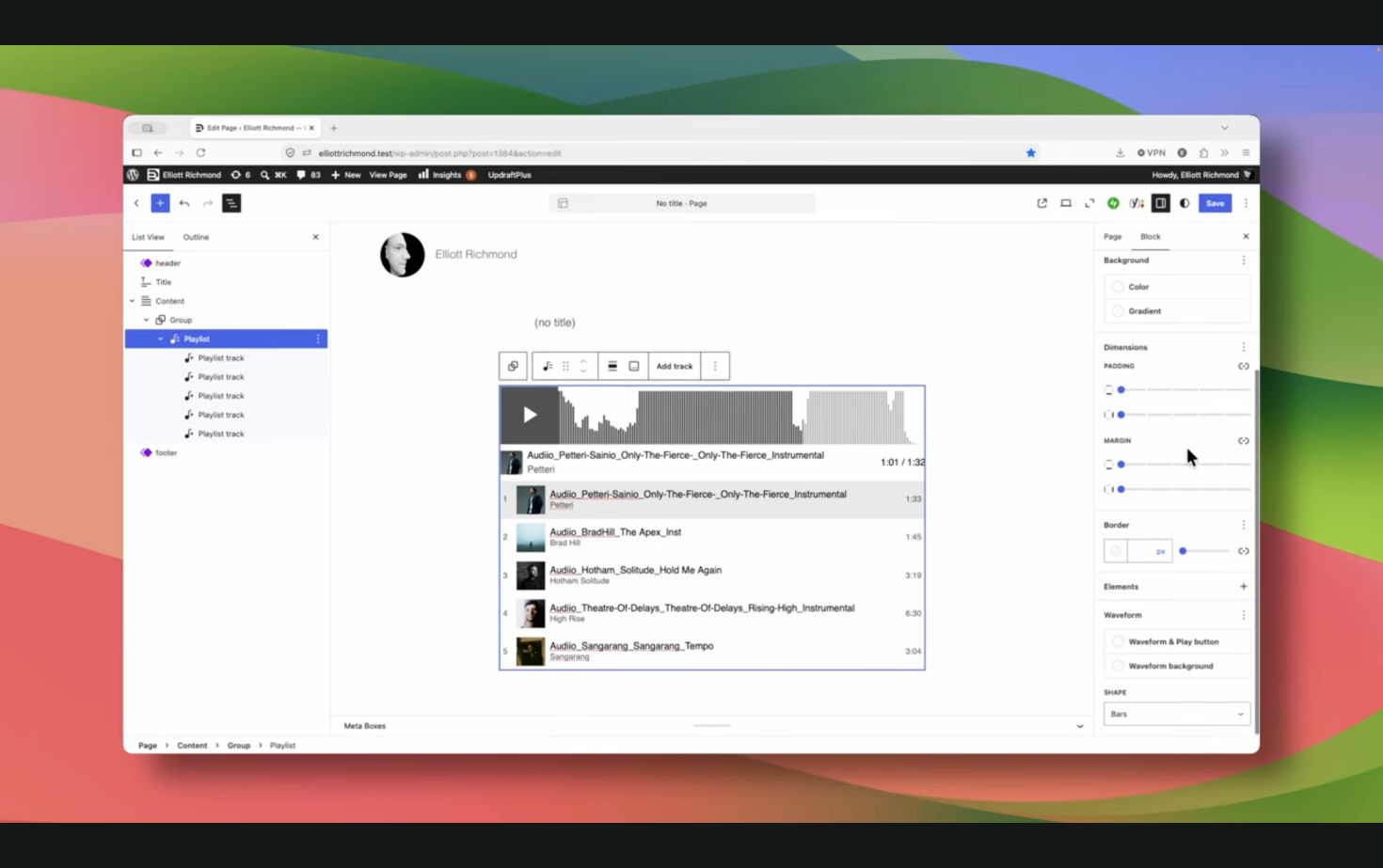
The new Playlist block is another important addition. It can present multiple audio files with an optional waveform visualisation, bringing audio back into focus as a first-class publishing format in WordPress Core. Podcasts, music and interviews can be presented with a powerful native player instead of depending immediately on a third-party audio plugin.
Elliott also tests the new Tabs and Icon blocks, gradient backgrounds, text shadows, improved block previews, the option to mark decorative images correctly for screen readers, a smarter Query block and the administration bar throughout the editing environment.
The long-term interest: a WordPress that depends less on plugins
For all2all, this is the important direction.
We recommend building websites with Gutenberg and using as few plugins as possible. A plugin should add functionality that is genuinely missing—not duplicate something WordPress Core can already do.
A large plugin stack makes a WordPress website more difficult to upgrade. It creates dependencies between different developers and update schedules. It can slow the website down, introduce compatibility problems and increase the number of possible security vulnerabilities.
The objective is not to claim that every plugin is unnecessary. The objective is to build WordPress websites that do not rely heavily on plugins for their basic design and publishing functions.
By choosing Gutenberg, native blocks and Core functionality first, a website remains closer to WordPress itself. That makes it easier to maintain, safer to upgrade and better prepared for future WordPress releases.
WordPress 7.1 is an important step in this direction. More of what we need is now available in the browser, without an external page builder and without a plugin for every new feature.
Watch Elliott Richmond’s complete review:
WordPress 7.1 Reviewed — Fourteen Features Put to the Test
WordPress 7.1 is scheduled for release on 19 August 2026. Until then, the release candidate should only be tested on development or staging websites.
Illustration: still from Elliott Richmond’s WordPress 7.1 review, showing the native Playlist block in Gutenberg.